

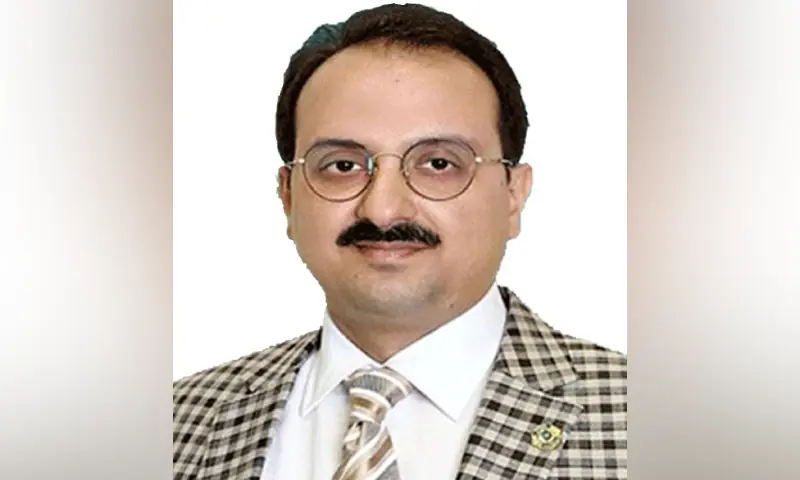
HYDERABAD: The Federation of Pakistan Chambers of Commerce and Industry (FPCCI) has criticised the government’s austerity measures, describing them as an “economic curfew” imposed on people while wasteful spending remained untouched.
In a statement issued on Saturday, Adeel Siddiqui, an Executive Committee member of the FPCCI, said the prime minister had approved a 50 per cent cut in petrol allocation for government vehicles, a ban on the purchase of new vehicles and durable goods, restrictions on officials’ foreign travel, restrictions on business-class and club-class travel, a ban on seminars and conferences at government expense, a 5pc cut in non-essential government expenditure, and restrictions requiring markets and wedding halls to close early.
He said these measures might appear attractive on television but were fundamentally disconnected from the actual reality of fuel consumption. He said that with petrol priced at Rs391 per litre and diesel at Rs425 per litre, the government collected Rs105.65 per litre in different taxes and levies.
Mr Siddiqui said the recent business timing restrictions perhaps had no effect on fuel consumption because early market closures led to zero fuel savings, as trucks and the supply chain worked 24/7. Wedding halls, he added, operated on diesel, resulting in zero petrol usage even if they were shut by 10pm.
Govt still charging Rs105 per litre in taxes and levies on diesel and petrol
Similarly, he said, restricting one-dish serving would not result in fuel savings because catering was not a petroleum product. He questioned how restricting menus could reduce Pakistan’s oil import bill when actual fuel consumption was in freight, agriculture and industrial production.
Mr Siddiqui said the 50pc cut in government petrol consumption was minimal because government vehicles accounted for only a fraction of overall consumption, while the 5pc cut in non-essential expenditure was symbolic as Rs1,071 billion in federal government spending remained untouched.
Quoting various reported monetary losses in state-owned enterprises (SOEs), he said the losses involved “shocking numbers” that were difficult to overlook. He said losses of Pakistan Railways were reported at Rs60bn, those of the National Highway Authority at Rs295bn, Qesco at Rs113bn and Pesco at Rs93bn, among others.
He explained that if the government cut 10pc from the Rs2,078bn it spent supporting loss-making SOEs , it could still save Rs200bn, which would be enough to provide meaningful relief to millions.
Mr Siddiqui demanded an immediate 10pc cut in the Rs2,078bn financial support for loss-making SOEs, which he said would save Rs200bn for the national exchequer. He also called for the removal or drastic reduction of the Rs105 per litre petroleum levy, describing it as the single largest component of the retail price.
He urged the government to extend a targeted fuel subsidy to commercial transporters, whose freight costs directly determine the prices of essential goods. He also said daily fuel pricing should be suspended as it affected businesses’ ability to plan logistical costs. Mr Siddiqui appealed to the prime minister to stop announcing symbolic austerity measures and convene an emergency economic council comprising business leaders, transporters and energy experts to develop a plan to reduce Pakistan’s dependence on imported fuel.
Published in Dawn, September 20th, 2026